19 June 2017

30 May 2017 - Garden visit to Le Jardin d'Eguilles de Max Sauze in Eguilles & Bastide de Romégas in Aix-en-Provence


Le Jardin d'Eguilles


Sue wrote:
Max Sauze is an incredibly creative man who is heavily into creative re-cycling (paper, wine bottle corks, plastic bottles etc.) and the town garden of nearly  900 sq.m. is an intriguing outdoor exhibition of a lifetime of inventiveness and  what can be achieved with the combined effect of a glue-gun and nimble fingers.

His delightful wife Anne welcomed us and explained that her husband was an artist until marriage and the arrival of three hungry children had him casting around for a better paid occupation.   He set about designing modern lighting for the domestic market which became internationally successful , (and featured in films too) and the garden shed was at one end a busy workshop and at the other end the order despatch department of a  busy enterprise.   This is now continued by their son in nearby Lambesq.


The shady garden achieved Jardin Remarquable status in 2005 and has been created by Max and Anne Sauze from scratch, starting with just one large existing  tree.   It is now a haven of shade against the harsh provencale sun with bamboos interspersed wit the amazing, often whimsical and quirky, creations of an inventive man.  For my info visit the website:  http://www.max-sauze.com/


Bastide de Romegas

In the afternoon we took a short drive east to the Bastide de Romegas where the current owner, Mme. Rater, is the sixth generation of the family who built the house in the 17th century.   The garden joined the ranks of Jardins Remarqables in 2011 and is maintained by Mme. Rater herself with the help of two gardeners twice a month.   The property has two unique features, the first is an underground water system (réseau souterrain de mines d’eau and the tèse (curiously the website mentions both these but offers no photos or description and Google has failed me on both!)
It was only thanks to GPS that we arrived at the house on time for our visit since the Aix-en-Provence Tourist Office map shows the house to the south of the Aix-en-Provence to Pertuis road whereas the house is to the north (it will be interesting to see if the tourist offices corrects their map following my email).


A short tree-lined drive leads to the house with a large almost circular stone 18th century wheat threshing floor surrounded by majestic trees amongst which a cedar of Lebanon.   The house is more imposing on the entrance elevation and simpler on the facade overlooking the garden where a broad gravelled terrace with a line of magnificent Anduze pots are planted with XXXXXXXXXX.  

Beyond the terrace is a meticulously trimmed box parterre with white Iceberg roses planted around (the box lines are so close that there are no beds in between the lines of box).  This was created in 1864 and replanted in the 1960s.   


A central walk leads to a small formal circular pond and continues through the box to a long narrow shady path through the tèse where small birds were netted in the 18th century.


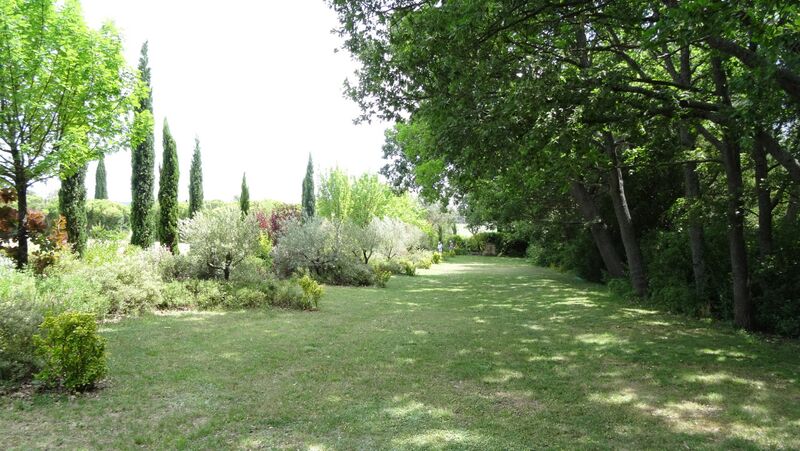
Turn left at the bottom of the walk and head back to the house parallel to the tèse up a broad grassy area with a widely scalloped planting on the right with olive trees planted at the points of the curves.   An extensive collection of cistas are planted in between the olive.


At the end and just past the tiny chapel is a rose bed with a new vegetable garden planted in the style of a potagier which is Mme. Rater’s pride and joy!


Photo's Cees Bos

28 March 2017

Different types of roots + what is the difference between bulbs, corms, tubers and rhizomes.

The Root

What is the function of a root:

  • Absorption of water and nutrients through the root hairs.
  • Anchoring the plant into the soil to support it.
  • Storage of food and nutrients.
  • Synthesis of specific components (nicotine).
Parts of a root:


  • Primary root, not dominant, the whole root is a system of fibres and branches.
  • Lateral roots.
  • Root hairs.
  • Root tip.
  • Root cap.
Types of root:
  • Primary root with lateral roots (Geranium).

  • Taproot (Carrot).
  • Fibrous root (Leek).

  • Tuber (Potatoes).

  • Aerial roots(Ivy).

  • Tuberous root (Dahlia).

  • Haustoria root (Mistletoe).


  • Runners or Stolons (Strawberry) - Stolons are horizontal stems that run above ground and produce new clone plants spaced at various intervals.


True Bulbs - Daffodil, Tulips, Hyacinth, Snowdrop. Lily.


  • Most have a papery skin (tunic) on the outside, to prevent the bulb from drying out. Lilies do not have a papery skin and therefore dry out faster and are more easily bruised.
  • They are more or less rounded and narrow to a point on the top.
  • They have a flat part called a basal plate at the bottom. The roots grow from the basal plate as well as the shoots and scales.
  • True bulbs have new bulbs (offsets which form from the basal plate).
  • They are made up of rings called 'scales', which are modified leaves that store food.
  • True bulbs add rings each year from the inside, outside rings are used up.

Daffodil blindness

A number of causes can be to blame for daffodil blindness;

Dry situation: In a dry place, or in drought conditions, daffodils may die down prematurely. After flowering, growth should normally continue for several weeks, allowing food reserves in the bulb to be replenished before the following season's flower buds are formed. If growth stops prematurely the bulb may, due to lack of food reserves, fail to form a flower bud.

Defoliation: Leaves removed soon after flowering by mowing or when tidying up the garden can lead to blindness. As with dryness it prevents the bulb building up food reserves for the future.

Knotting: Gardeners often tidy up clumps of daffodils after flowering by drawing the leaves together into a knot. This is not recommended as it reduces their ability to function and may cause or increase the risk of blindness.

Seeding: Allowing seed capsules to form after flowering means that energy is diverted from the process of bulb rebuilding.

Nutrition: Good quality and newly purchased bulbs will normally flower well in their first year on any kind of soil, but in poorer light soils performance may rapidly decline without some additional nutrition.

Planting depth: Shallow planting encourages bulbs to divide, producing lots of bulbs too small to flower.  Plant bulbs 2 to 4 x their depth.

Planting time: Bulb performance can rapidly decline if bulbs are planted later than mid-September.

Overcrowding: After a few years, clumps of daffodils may become overcrowded leading to poor flowering.

Pests: Narcissus bulb fly and narcissus eelworm may damage bulbs leading to poor flowering.

Diseases: Diseases such as narcissus basal rot or daffodil viruses may cause bulbs to die or decline in vigour and flowering


Corms - Crocosmia, Gladioli, Freesia, Crocus.


  • Corms have a papery skin (tunic) and a basal plate at the bottom and 1 or more growing points at the top.
  • They are uniform from the inside and do not have rings.
  • Corms are stem tissue, modified and developed to store food.
  • They are used up for growing the flower before it withers away and has formed 1 or more new corms. The new corm contains the food reserve for the dormant crocus.
Tubers - Potatoes, Tuberous Begonia, Cyclamen, Anemones.


  • Tubers have no papery skin (tunic).
  • They have not basal plate, most root from the bottom.
  • They have several growing points called 'eyes'.
  • With some tubers like Anemones it is difficult to find the growing points.  With them it is best to plant them sideways.
Tuberous roots - Dahlias, Daylilies, Sweet potatoes.


  • They are modified, enlarged, specialised roots that store food. They are used up during the growing season to be replaced by new storage units.
  • They cluster together, joined to the bottom of a stem. The stem contains the new growing point for the next year - a piece of root alone won't grow.

Rhizomes - Iris, Lily of the Valley, Canna, Ginger.


  • Rhizomes branch out and each new portion develops roots and a shoot of itw own.

How to divide plants:

Lots of perennial plants can be divided, however the plant should have a root ball, plants that spread from a central crown and have a clumping growth habit.

Plants with a taproot are propagated through cuttings and seeds.

When to divide garden plants:

Plants are divided in early spring or autumn, normally spring and summer flowering plants are divided in autumn and the others are divided in spring.

Dividing the plants:

After some years a perennial start showing signes of aging.  The central part of the clump is not longer producing flowers.
  1. Dig up the entire clump carefully so not to damage the roots. Shake off the excess soil.
  2. Separate the plant by chopping through the crown with a spade.
  3. Divide the plant into smaller pieces by hand, retaining only the healthy sections and discard the old centre bit.
  4. Trim the top, make sure the root section is larger than the top of the plant.
  5. Take the opportunity if you want to replant the perennial in the same spot by cleaning and fertilising the area before replanting or plant them out in a different spot.


Dividing fibrous roots:
  • When a plant is difficult to separate, for instance with fibrous roots, use two forks, back-to-back and tear the plant apart.

Dividing fleshy rootstock:
  • With plant like Agapanthus or Hosta, cut the plant with a spade into sections, may sure that each section has a shoot or eye.


Dividing rhizomes like rhizomatous Iris or Bergenia:
  1. Lift the plant with a fork, making sure you enter the fork into the earth well away from the rhizomes to avoid damaging them. 
  2. Shake the plant to remove excess soil, split into managing pieces by hand.
  3. Discard the old rhizomes and cut the rest into small new clumps making sure they have roots and a shoot or eye.  
  4. Trim off the old, excess root.
  5. Trim of long shoots and with an Iris cut the leaves into a mitre shape about 15 cm tall.Plant the rhizomes 15 cm apart.  
  6. The rhizomes should be half buried, with their leaves and buds upright. Firm in and water well.


Bibliography:  RHS Encyclopedia of Gardening; Website - Gardening Know How, Dividing Plants; National Gardening Association - What are bulbs, corms, tubers and rhizomes.
Photos:  Web


08 March 2017

Garden Group Meeting - 28 February 2017 - Video of Highgrove


Sue visited Highgrove, Prince Charles' garden, last summer. She was very impressed.  Subsequently she came across a video on U-tube about the garden. For those members who were not able to see it, the video link is:

 https://www.youtube.com/watch?v=q78zAev6ZH8


LinkWithin

Related Posts Plugin for WordPress, Blogger...