26 January 2012

IWCP Garden Group Meeting - 24 January 2012

Gerda's flower arrangement with all the winter flowering shrubs we discussed


Bamboo


At our meeting, Sylvia asked about eradicating a smallish patch of bamboo from her garden.  Various ideas were expressed, including some rather dangerous use [I hold my hand up] of petrol to the drastic measure of moving house !

Sue has found the link to the Bamboo Garden – an American website that looks highly informative. [Click on highlighted text]

Other sites in France are : La Bambouseraie de Prafrance & Bambous du Mandarin, Pont de Siagne, 83 440  Montauroux  Tel : 04 93 66 12 94
This is a link to a list of specialised nurseries : Le Jardin des Bambous

If you know of any others, please pass the information on !

09 January 2012

Winter-Flowering Shrubs


Maquis in the hills surrounding Correns with Erica arborea in bloom now.

One of the topics of our next Garden Group meeting is going to be winter-flowering shrubs. This winter, being so mild, is not totally representative of what normally flowers at this time of the year. The shrubs I'll concentrate on are truly winter flowering, I've excluded almond and mimosa as we've already published blogs on them. Most of the flowers of the winter flowering shrubs are not hugely impressive, this is compensated by the fragrance of many of them.

Many of the winter flowering shrubs originate from outside Europe. They’ve adapted well to the N. European climate as their climatic conditions are similar to ours in N. Europe. In our area of the Provence with our very hot summers, it is advisable though to plant them in a spot where they are out of direct sunlight during the hottest period of the day to prevent the leaves from scorching, the winter temperatures are not an issue.

Shrubs that have adapted well to our particular region are marked with an *.

Some need acid soil. The best solution for that is to grow them in pots. I've not included Camelia and Rhododendron in my list of plants. These two are very often grown in pots. In fact I've two quite large Camelia's in pots, they are about to flower now.

What I found quite curious, in the hills around Correns in a mixed habitat grow Pinus halepensis (Aleppo pine), Rosmarinus (Rosemary), Cistus albidus and Erica arborea (Tree Heath). Our soil in the area is mostly calcareous soil. Rosemary and Cistus albidus prefer calcareous soil whilst Erica likes acid soil. Somehow they seem to co-exist happily, perhaps the Aleppo pines give off enough acidity for the Erica arborea to flourish.

Our list:

*Ampelaster carolinianus (Climbing Aster), native of S.E. U.S.A., climber up to 4m, fragrant evergreen, flowers lilac from early winter onwards. Prefers fertile, moist soil, but is tolerant to our summer drought. Benefits from being cut back in spring. Temperature up to -15C.
*Arbutus unedo (Strawberry Tree), native to the Mediterranean region, height 3m, evergreen, bears strawberry like fruits and bell shaped white flowers at the same time from autumn through early winter. Prefers sun or half shade, well drained calcareous soil. Temperature up to -15C.
Azara microphylla, native of Chili and Argentina, height 10 m., fragrant evergreen, flowers yellow, from February onwards. Prefers sun but will tolerate shade, fertile, well drained soil. Temperature up to -10C.

*Chaenomeles superba “Ernst Finken”, Chaenomeles is native to mountain woodland in China and Japan, deciduous, height 1.5m, spread 2m., flowers range from white flushed with pink to red from February onwards. Prefers sun, well drained soil. Temperature up to -10C.
Chimonanthus praecox (Wintersweet), native to woodlands in China, deciduous fragrant shrub, height 4m, spread 5m, flowers sulphur yellow from January onwards. Prefers half shade, acid soil, requires watering but needs good drainage. Several cultivars. Temperature up to -15C.

*Citrus aurantium (Bitter Orange), Citrus clementinier (Clementine), Citrus deliciosa (Mandarine), Citrus reticulata (Mandarine), Citrus paradisi (Grapefruit),

Citrus sinensis (Orange), Citrus trees originate in S.E. Asia, evergreen fragrant shrub/trees, flowers white from February onwards, prefers sun, acid but well drained soil. Most of the time they are planted in pots in our region, but I've seen them growing in gardens in sheltered spots. Michelle has a lovely grapefruit tree in her garden and in Lorgues near the church is a wonderful large lemon tree. Citrus trees can survive lower than zero C, but general advise is not lower than zero degrees C.

Clematis cirrhosa balearica, native to the Mediterranean region, from Spain to Portugal, eastwards to Syria, fragrant evergreen climber up to 4m, white flowers with red spots in winter with silky tassels fruiting heads in May. Any soil, preferably dry. Temperature up to -15C.

Corylopsis spicata, originates in woodlands and shrub land E. Himalayas, China, Taiwan and Japan, fragrant, deciduous shrub, height 1.5m, spread 2.30m, pendant racemes of 6-20 bell-shaped flowers from February onwards, prefers sun, requires moist, fertile but well-drained acid soil. Temperature -15C.

*Corylus avellana (Hazel), originates in N. temperate regions, most woodlands, decidious shrub, height 5m, yellow catkins from February onwards, prefers sun, calcareous, well-drained soil. Temperature -15C.
*Daphne bholua, native to E. Himalayas, fragrant deciduous or evergreen shrub, height 2-4m, flowers purplish pink from January onwards. Prefers sun, moderately fertile, well drained soil but not dry. Temperature up to -5C.

*Daphne mezereum, native to Europe, Caucasus, Turkey and Siberia, fragrant deciduous shrub, height 1.5m, flowers purple or pink from February onwards. Prefers sun, well drained soil but not dry. Temperature up to -15C.

*Daphne odora “Aureomarginata”, native to China and Japan, fragrant evergreen shrub, height 1.5m, flowers purplish pink and white from January onwards. Prefers sun, well drained but not dry soil. Temperature up to -5C.

*Elaegnus x ebbingii, garden origin, but frequently seen as hedges in our area, fragrant evergreen shrub, height 4m. Prefers sun, calcareous, well drained soil. Temperature up to -15C.
*Erica arborea (Tree Heath), native to our region grows underneath the Pinus halipensis (Aleppo Pine), evergreen shrub, height 4m, flowers white to pink from December onwards. Prefers sun to half shade, well drained acid soil. Temperature up to -10C. (For photo see top of the page.)

Garrya elliptica (Silk -tassel bush), woodland and scrub from W. U.S.A. to Central America and the W.Indies, evergreen shrub, height 4m, grey-green, very long catkins from January onwards. Prefers sun, well drained soil. Temperature up to -5C.

Hamamelis virginiana (Virginian witchhazel), native E. Asia and N. America, deciduous fragrant shrub, height 4m., flowers yellow from January onwards. Prefers sun, acid, well drained soil. Temperature up to -15C. There are several cultivars. Hamamelis x intermedia “Diana” has deep red flowers.

*Jasminum mesnyi, native to S.W. China, evergreen shrub, height 3m, spread 1-2m, flowers yellow from December onwards. Prefers sun, well drained soil. Temperature up to -15C.
*Jasminum nudiflorum, native to W. China, deciduous shrub, height and spread 3m, flowers yellow from December onwards. Prefers sun, well drained soil. Temperature up to -15C.

*Lonicera fragrantissima, native to China, fragrant evergreen shrub, height 2m, flowers white from February onwards, Prefers sun-half shade, well drained soil. Temperature up to -15C.

*Mahonia japonica, native to China, fragrant evergreen shrub, height 2m, spread 3m, flowers yellow from November onwards. Prefers semi-shade, moist soil. Temperature up to -15C.
*Mahonia x media, garden origin, several cultivars M. x media“Charity”. M. x media “Buckland”, fragrant evergreen shrub, height 5m, spread 4m, flowers yellow from November onwards. Prefers semi-shade, moist soil. Temperature up to -10C.

Prunus mume, native of China, decidious shrub or small tree, height and spread 9m, deep pink flowers late winter, followed by edible apricot like fruits. Prefers moist, fertile but well drained soil. Temperature up to -15C.
*Rosmarinus officinalis (Rosemary), native to the Mediterranean region, evergreen shrub, flowers violet-blue from December onwards. Prefers sun, calcareous soil. Temperature up to -15C.

Sarcococca (Sweet box), evergreen fragrant shrubs, several species, most popular Sarcoccoca humulus, native to W. China, height 60cm, spread 1m. and Sarcoccoca hookeriana, native to W. China, height 1.5m spread 2m, flowers white from January onwards. Prefer semi-shade, moist, not too alkaline soil. Temperature up to -15C.

Stachyurus praecox, native to Japan, deciduous shrub, spikes of pale greenish-yellow catkins from February onwards. Prefers sun, well drained soil. Temperature up to -20C.

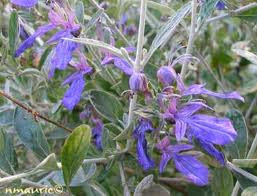
*Teucrium fruticans "Azureum", native to W. Mediterranean, height 60cm-1m, spread 4m, evergreen shrub with dark blue flowers from January onwards. Prefers sun, well drained soil. Temperatures up to -15C.
*Ulex europaeus (Gorse), native to W., C., and S. Europe and N. Africa, height 2.5m, evergreen shrub with deep yellow flowers from January onwards. Prefers sun, well drained soil. Temperatures up to -15C.

*Viburnum bodnentense “Dawn”, garden origin, height 3m, spread 2m, deciduous shrub with fragrant deep pink flowers from January onwards. Prefers sun or half shade, moist but well drained soil. Temperatures up to -15C.
*Viburnum farreri, native to N. China, height 3m, spread 2.5m, decidious shrub with fragrant white flowers from January onwards. Prefers sun or half shade, moist but well drained soil. Temperatures up to -15C.

*Viburnum grandiflorum, height 2m, spread 2m, native to the Himalayas and W. China, decidious shrub with fragrant, flushed with pink, white flowers from January onwards. Prefers sun or half shade, moist but well drained soil. Temperatures up to -15C,

*Viburnum tinus, native to the Mediterranean region, height 3m, spread 3m, evergreen shrub with fragrant white sometimes light pink flowers from February onwards. Native to our region. Prefers sun or half shade, moist, calcareous, but well drained soil. Temperatures up to -15C.


04 January 2012

janvier 2012 Les conseils jardin de Jean-Yves Meignen

De toute évidence Janvier incite le jardinier au repos. Très souvent le froid implique un peu de patience avant d'entreprendre les travaux de taille, de semis ou de plantation. Néanmoins ce temps peut être consacré à la réflexion sur des projets mais aussi à prendre note de ses expériences liées au jardin et à retirer des enseignements.

Le bois mort est une source d'abris pour de nombreux insectes utiles aux plantes, aussi n'hésitez pas à en laisser ou à en introduire dans le jardin. Par exemple, vous pouvez tapisser de branches le pied des arbres ou des haies.

Au verger, vous pouvez encore appliquer le traitement d'hiver à base d'huiles végétales. Il faut attendre une belle journée ensoleillée avec une température de 10 °C. Les tailles seront faites hors gel, en restant doux dans les choix de coupes et en privilégiant l'aération de la ramure.

Les élagages des arbres se font, seulement si nécessaire, pendant cette période de repos végétatif en pratiquant de belles coupes et en appliquant éventuellement un produit cicatrisant.

A l'intérieur, vous devez apporter de l'humidité ambiante à vos plantes vertes, soit par des vaporisations fréquentes, soit en plaçant des saturateurs d'eau en particulier près des radiateurs qui asséchent l'atmosphère. Donnez un maximum de lumière à ces plantes qui ne sont pas adaptées à nos courtes journées.

Les jours froids peuvent être occupés à l'entretien des outils (huile de lin sur les manches, affutage et graissage des outils de taille). Faites aussi le tri de vos sachets de graines en regardant les dates limites de germination. Vous pouvez tester leur pouvoir germinatif en déposant quelques graines dans une coupelle avec de l'eau tiède. Gardez les au chaud (si 50% des graines germent alors conservez les pour semer).

Mon dernier conseil sera de vous inviter à nourrir les oiseaux qui peuvent en avoir besoin en ces périodes de froid, surtout si votre jardin est dépourvu d'arbustes à baies. Privilégiez les aliments riches en hydrates de carbone et en graisse. Pensez aussi à leur laisser des points d'eau en cassant la glace (hors d'atteinte des prédateurs).

Bon jardinage

12 December 2011

Poinsettias


As the Christmas season approaches, the Poinsettias are for sale everywhere. Quite a few of us buy them every year. I tend to buy them just before Christmas, if I buy them earlier, I end up with a plant that has a few leaves at the top and the rest of the stalk is bare. What can we do to keep them looking nice, for a longer period.

First of all a Poinsettia, the Latin name is Euphorbia pulcherrima, is a native of southern Mexico and the north of Guatemala. A tropical area of the world. The first time I saw them growing in the wild was on the way to Fraser's Hill in Malaysia (a colonial hill resort), much like we see Oleanders growing in the central reservation here in the Var. They must have been imported into Malaysia during the colonial period. It was quite stunning, rows and rows of them.

The red bracts (modified leaves) and not the flowers make the plant so attractive. The flowers are in the centre of the red bracts. Nowadays through hybridisation Poinsettias range in colour from red to white. When choosing a Poinsettia make sure the flowers in the centre of the bracts are still closed, which means the plant is at the beginning of its cycle.

Here follow a few tips:

During transport from shop to home make sure the plant is well wrapped, Poinsettias do not like big difference in temperature.

Place the Poinsettia near a sunny window, room temperature max. 22 degrees C, dropping to 15 degrees C. at night. Avoid too much variations in temperature. Do not let the leaves touch the windows.

Only water the plant whenever the surface feels dry to the touch. Water until it drains out of the bottom, but do not let it stand in water.

In nature Poinsettias grow in a tropical climate, they like humid conditions. If your living room is too dry, you might find you have to water the plant daily.

After Christmas care:

At the end of the winter the coloured bracts will drop. Keep watering as mentioned above till March.

In April, gradually decrease the watering, allow the plant to get dry between watering periods. After about 2 weeks of the drying out period, move it to a cool spot, never less than 15 degrees C.

In mid May, cut the stems back to about 4 inches and repot in a slightly larger container, with new soil. Water it well. Place it in room near the window with temperatures around 22 degrees C. Continue watering when plant feels dry. Once new growth appears, begin fertilising.

In June the Poinsettia can be placed outside in a shaded location.

In July pinch back the new growth by 2.5 cm, to encourage the plant to branch out. Do the same in August. When the weather gets colder bring the plant inside and place it near a window.

In October to create the colourful bracts the plant needs to be kept in total darkness from 5pm to 8am each day for 8 weeks. During the day place the plant again near a window and continue with the normal watering and fertilising.

End of November, stop creating the total darkness, place the plant near the window.

December, stop fertilising about December 15th and treat it as you did when you first bought it.

Bibliography: Rustica, About.Com - Poinsettias


LinkWithin

Related Posts Plugin for WordPress, Blogger...