02 October 2011

Tuesday, 20/9/11, Garden Group Meeting at Carolyn & Douglas


Our September Garden Group meeting was held at Carolyn & Douglas's house just outside Lorgues. It is a new house finished in February 2003, the garden "construction phase" took place between 2004-2006, the main plantings from 2006 onwards. To give an idea of how many plants were needed to create this garden (apart from a few existing old olive trees on the lowest terrace):

Trees: 19 Florentin Cypres trees, 2 Platanes, 25 Olive Trees - 4 varieties, Aglandau, Bouteillan, Cayon, Picholine, bought at La Tuiliere in Aups, 1 black Fig Tree, 2 Lagerstroemia and 1 Pine.

Hedges: 90 Leylandi 2000 (Gamm Vert Draguignan), 100 others - a mixture of Oleander, Viburnum, Photinia, Laurus nobilis, Eleagnus and Pyracantha.

Shrubs: a mixture of 145 Lavander/Lavandin - Lavandula angustifolia "Hidcote", Lavandula chaytorae "Silver Frost", Lavandula x intermedia "Grosso", Lavandula x intermedia "Dutch", bought either at "Filippi" in Meze or at the "Coop" in Les Arcs, 120 Roses (Meilland on line).

Douglas constructed his potager in 2010/2011. He designed it very cleverly. The way it was constructed seemed so well planned and practical that I asked him if he could write it down for us. The tubing, bits and bobs for the watering system were bought at Irrijardin in Trans or Puget www.irrijardin.fr, or Amitube on RN7, Vidauban. Douglas is very happy helping any interested party if they have some problems. Below are his wonderfully explicit drawings and advise:


06 September 2011

Roses, how can we improve our soil to grow them with greater success


It is now the beginning of September and when I look at my roses I can see that as usual the hot summer has robbed them of their vitality, almost all of them suffer from black spot, the leaves are somewhat yellowish, in short you can see they lack something.

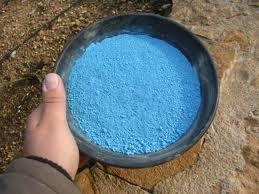
Emailing Michele the other day, she mentioned she had visited her father and was admiring his roses. She asked him what was his secret. He said that in spring and autumn he sprinkles "Sulphur Soil" around them bought through the following website: http://www.greenacresdirect.co.uk/organic_product_details.php?prodID=161&name=Sulphur%20Soil
She then asked me whether I had seen anything like this in France. So far I haven't but I would like to ask our members to keep a look out for a similar type of product.

I started looking for more information on Sulphur (S). It is one of the 6 major elements (macro elements) in our soil next to Nitrogen (N), Phosphate (P), Calcium (Ca), Magnesium (Mg) and Potassium (K). Quite an important element. Unfortunately for us, our alkaline soil does not contain enough Sulphur. The lack of Sulphur has an influence on the general health of the plant, plant is prone to diseases and indirectly "chlorose". Lack of Sulphur reduces the absorption of proteins hence the reduced growth.

Although it naturally occurs in our soil, we do not add Sulphur (S), we add Sulfate:
and then normally in a compound like:
Magnesium Sulfate (Epsom Salts) - the Magnesium greens things up, and the Sulfate acted upon by bacteria becomes (simplisticly) Sulphuric Acid. The average plant desires an acidic growing medium to enhance the ability of the roots to use any available nitrogen for plant growth.
Iron Sulfate - "Revised" is principally an anti-moss agent. If you live in an area with acid soil and you sprinkle Iron sulfate on your lawn it works in a similar way as Magnesium Sulfate, it encourages the growth and consequently the lawn turns a nice green colour, but only if you have acid soil, if you try the same on alkaline soil it will have no effect as the Iron sulfate becomes a "hydroxide" which is insoluble in water.

In previous meetings we have mentioned Iron sulfate as a cheap option to treat "chlorose" (a condition in which leaves produce insufficient chlorophyll) instead of the more expensive "Iron chelate". Iron chelate (chelated iron) is a soluble complex of Iron and Sodium and a chelating agent (chemical reaction involving a protein structure binding a metal element). As "chlorose" is a problem that occurs when plants that prefer acid soil are planted on an alkaline soil, there is absolutely no point in using Iron sulfate as this product cannot be broken down on alkaline soils, and therefore cannot be used to treat "chlorose". If we want to treat "chlorose" we just have to go for a product specifically aimed at treating "chlorose", there is no cheap option.


Copper Sulfate (Bouillie Bordelaise) - used extensively in France as a preventive measure against fungal and bacterial disease.

Lime Sulfate - used a lot in the U.S.A. and Canada in a similar way as Bouillie Bordelaise. It is a much more aggressive material but very successful in treating black spot on roses. The instructions on the packet have to be followed to the letter, protective gear like gloves and goggles need to be used.

Calcium sulfate (Gypsum), improves soil structure. It provides Calcium which is needed to flocculate (break up) clay in acid and alkaline soils. Gypsum decreaes pH of Sodic soils (soil high in Sodium).

All in all Sulphur, in its useable form Sulfate is very good tool for us gardeners, not only as a soil improver but also as a fungicide and pesticide.

Failing to find "Sulphur Soil" to acidify the soil, the recipe below acidifies, eliminates/reduces the chlorose and black spot problems and improves the soil structure by adding compost and manure:
Dig a trench around the rose, fill it with peat; add an anti-chlorose product; add fleurs de soufre, a highly refined powder made out of Sulphur available in hardware stores and garden centres; compost and manure. Repeat this once a year.
In addition add rose fertiliser twice a year.

Apparently when coal was being used as a fuel and the clean air act was not yet in force, roses suffered less from black spot. The following quote from Wikepedia explains why. Quote" Since coal and petroleum often contain sulfur compounds, their combustion generates sulfur dioxide unless the sulfur compounds are removed before burning the fuel. Further oxidation of SO2, usually in the presence of a catalyst such as NO2, forms H2SO4, and thus acid rain.

Bibliography: Wikipedia; UBC Botanical Garden Forums; Cursus Kruidenteelt by Dr. K. Demeyer (VUB)

02 September 2011

Les conseils jardin du mois de Jean-Yves Meignen


septembre 2011


Les conseils jardin du mois de Jean-Yves Meignen

La météo reste le souci premier du jardinier ; enfin par souci j’entends préoccupation. Nous devons rester très humbles devant la nature qui guide nos pas dans le jardin. Nous avons bien eu notre période caniculaire, mais en août cela a peu de conséquences car les plantes se préparent pour l’hiver avec des croissances très réduites. Pour beaucoup d'entre nous les récoltes ont été très hâtives avec des fruits abondants. Il faut se préparer au phénomène de « l’alternance » des arbres qui produiront certainement moins en 2012.
L’arrosage : un sujet qui revient très souvent dans mes conseils mensuels parce qu'il est primordial de bien le gérer. Vous m’entendez répéter qu’il faut arroser copieusement et de manière espacée dans le temps. L’eau doit pénétrer en profondeur pour toutes les plantes pérennes qui ont un enracinement profond. Ces plantes sont à choisir pour nos jardins provençaux. Pendant ce mois de septembre, à défaut de pluies conséquentes (minimum 50 mm répartis sur plus d’une 1h), il faut continuer les arrosages des arbres et arbustes surtout s’ils sont jeunes.
Une terre rafraîchie absorbe mieux l’eau qu’on lui apporte alors arrosez le matin !
Au verger : vous pouvez tailler « en vert » tous les arbres dont les fruits ont été récoltés. Supprimez les pousses trop vigoureuses depuis le départ des charpentières et réglez le volume des arbres pour favoriser la mise à fleurs de l’année suivante. Mais retenez la règle suivante : plus l’arbre est vigoureux moins il doit être taillé sinon il ne produira que du bois et pas de fruits.
Au potager : laissez les feuilles à vos tomates, aubergines et courgettes tant qu’elles ne jaunissent pas. Ce sont elles qui nourrissent les fruits ! Ne tentez plus de semis à cette époque. Les espaces qui se libèrent doivent être comblés par des semis d’engrais verts en optant pour la Phacélie ou la Moutarde qui rapidement occuperont le terrain, évitant le lessivage du sol tout en l’enrichissant.
Les plantes d’intérieur qui ont été sorties pour l’été peuvent encore rester à l'extérieur pour bénéficier de la douceur de ce mois de septembre.
Bouturez vos rosiers, hortensias, lauriers roses… pendant le début de ce mois. Prélevez du bois de l’année « semi-aoûté » : c'est à dire des pousses qui ont porté des fleurs. Leur diamètre doit être inférieur à un crayon. Taillez sous une feuille que vous enlevez et laissez deux feuilles au dessus. Préparez un mélange équilibré terreau et sable et plantez la bouture dans un pot mis dehors sous couvert d’un arbre.
Enfin, je vous conseille de stopper tous les apports d’engrais à la fin du mois, de tailler vos haies, buis et cyprès pyramide. Le gazon doit être tondu « haut » pour garder l’humidité du sol. Taillez les pousses vigoureuses des glycines.

Bon jardinage à tous……


Jean-Yves MEIGNEN

abbaye de Valsaintes

12 August 2011

Lavender & Lavandin


After our group’s recent visit to the distillery in St. Antonin I thought it may be interesting to our members to know more about the history surrounding Lavender and Lavandin essential oil.
There are three native Lavanders growing in the south of France. Along the coast Lavandula stoechas (with large petal like sterile bracts ((rabbit’s ears)), in the hills behind the coast up to 600 metres altitude, Lavandula latifolia (Spike Lavender) and in the Haute Provence, above 600 meters, Lavandula angustifolia, commonly known as Lavender.
Ever since the parfum industry developed in Grasse, farmers have been gathering Lavender in the hills of the Haute Provence. It was a cottage industry at the time. Families and later on itinerant workers from abroad would come in July and August to pick the Lavender. Very often the lavender would be distilled in an Alambic at the side of a field.
At the time Lavender was being picked by hand, it was mostly Lavandula angustifolia (Lavender), but between 600 to 700 meters, cross pollination took place between Lavandula angustifolia (Lavender) and Lavandula latifolia (Spike Lavender). The gatherers did notice that some Lavenders were taller and the flower spike was larger, but they did not really understand the reasons for it.
As science progressed the reasons for the differences were recognised. They named the Lavender created by the cross pollination “Lavandin”, the official name is Lavandula x intermedia. Lavandin ,they realised, was sterile and could only be propagated by taking cuttings. Lavandin has an uneven number of chromosomes hence the inability to produce fertile seeds.
It was in the 1920’s in Grasse that the interest to produce new types of Lavandin grew, but it was Père Abrial , in the 1930’s, who produced the first Lavandin that became very interesting for the industry. The Lavandin carried his name Lavandin “Abrialis” . It became so popular that 2/3 of all the fields were planted with this variety. It started developing an illness, in French it is called “dépérissement”, a plant fatigue one could say and was replaced by a new variety, Lavandin “Super.” Nowadays Lavandin “Abrialis” takes up 10-15% of the Lavandin production.
The same illness started to affect Lavandin “Super”. The reason for this “fatigue illness” was the lack of crop rotation. When the Lavendin became less productive it was just replaced with new young plants. Nowadays several different cereal crops and a green manure crop are planted for a period of four years after digging up an old Lavendin field.
In the years 1972-1975 a new Lavandin was born. It was selected by M. Grosso, from Goult in the Vaucluse. It is a very large plant, with a huge flower stalk, producing lots of oil, in addition it is quite robust, it was called Lavandin “Grosso” after its selector. 3/4 of the Lavandin one sees growing nowadays is Lavandin “Grosso”. The plateau of Valensole is almost exclusively planted with the “Grosso” variety. There are other Lavandin clones less well known like 41/70, Special Gregoire, 33/70 and Sumian, but the previously mentioned “Abrialis, Super and Grosso” are the most important.
Although this development seemed very interesting for the parfum, soap and detergent industry, Lavandin does not have the same medicinal qualities as Lavendula angustifulia (Lavender).
Lavandula angustifolia (Lavender) is nowadays produced in the north of the region, in the Diois, around the town of Die and in southern direction towards to Banon. In the Alpes de Haute-Provence around Digne, Barrême and in the Hautes Alpes, north-east of Gap. It needs an altitude above 600-700 meters to flourish well.
There is a cloned variety of Lavender called “Maillette”, which does not produce quite the same quality of oil, but is interesting to the industry because of its yield. Lavandula angustifolia (Lavender) is sown.
The quality of Lavandula angustifolia (Lavender) essential oil is measured in the amount of principally two constituents in the essential oil named “Linalyl acetate” and “Linolol”. For Lavandula angustifolia (Lavender) the French Pharmacopeia states that it should contain between 35-55% “Linalyl acetate” to be considered Lavender essential oil.
Distillers located in high altitude produce oils of higher “Linalyl acetate” content, not only because wild lavender plants growing at high altitude contain more esters but also because of the fact that at high altitude the boiling point is lower. It is not 100 degrees C but perhaps only 92 to 93 degrees C. Distillation at lower temperatures produces a better oil, it could contain up to 70 percent “Linalyl Acetate”.
Essential oil from Lavandin, because it produces more oil, is cheaper than essential oil from Lavandula angustifolia, but it is not of the same quality. As an example, oil from Lavandin “Grosso” contains between 28-38 % “Linalyl acetate”, Lavandin “Abrialis” contains between 20-29% “Linalyl acetate”.
In addition all the Lavandins have inherited from their other parent “Lavandula latifolia (Spike Lavander) Camphor in their oil, which makes it less pleasant to smell. Where in Lavandula angustifolia there are only trace elements of Camphor, in Lavandin ‘Abrialis “it is 7-11% and in Lavandin “Grosso” between 6-8 %.
What makes essential oil of Lavender so unique, compared to say “Tea Tree” oil, is because it has a regulating effect on the nervous system. It balances and harmonises. It adapts itself to conditions, restoritive in cases of listlessness or weakness, yet calming in hyperactivity and agitation. In addition it has fungicidal, preventive and immuno-stimulant qualities although not as pronounced at Tea Tree oil. It can be used neat to treat burns, cuts and spots. Lavandin “Abrialis” is a good anti-infectious oil and has sedative properties.

Saskia


Bibliography: “Lavande et Lavandin” by Christiane Meunier; Aromatherapy by Michel Vanhove


LinkWithin

Related Posts Plugin for WordPress, Blogger...